
Fast evidence preservation
We act early to request and preserve key trucking records and electronic data that can be lost with routine company retention cycles.
Serving Baton Rouge, Louisiana & surrounding areas

18-wheeler accident representation · Baton Rouge
When a tractor-trailer changes your life in seconds, you need a legal team that can secure evidence fast, build a liability case against every responsible party, and pursue the full value of your injuries.
A serious truck collision is different from a typical car wreck. An 18-wheeler accident attorney in Baton Rouge has to move quickly to preserve driver logs, electronic data, maintenance records, and statements before they disappear or get shaped by an insurance narrative.
At Truck Accident Lawyer Baton Rouge, our work starts with a clear plan: identify every potentially responsible company and insurer, document your medical harms in a way adjusters and juries recognize, and pursue compensation that covers what the crash actually costs you over time. In practice, that means organizing the case around records and deadlines, not assumptions.
If you are looking for Baton Rouge's trusted truck accident lawyer team, you should expect straightforward guidance, careful case building, and regular updates without legal jargon.
Liability and evidence
Truck cases often involve multiple layers of responsibility. The driver may have made an error, but the motor carrier's dispatch decisions, training, supervision, or scheduling pressures can matter just as much. In some claims, maintenance contractors, freight brokers, shippers, or trailer owners also play a role.
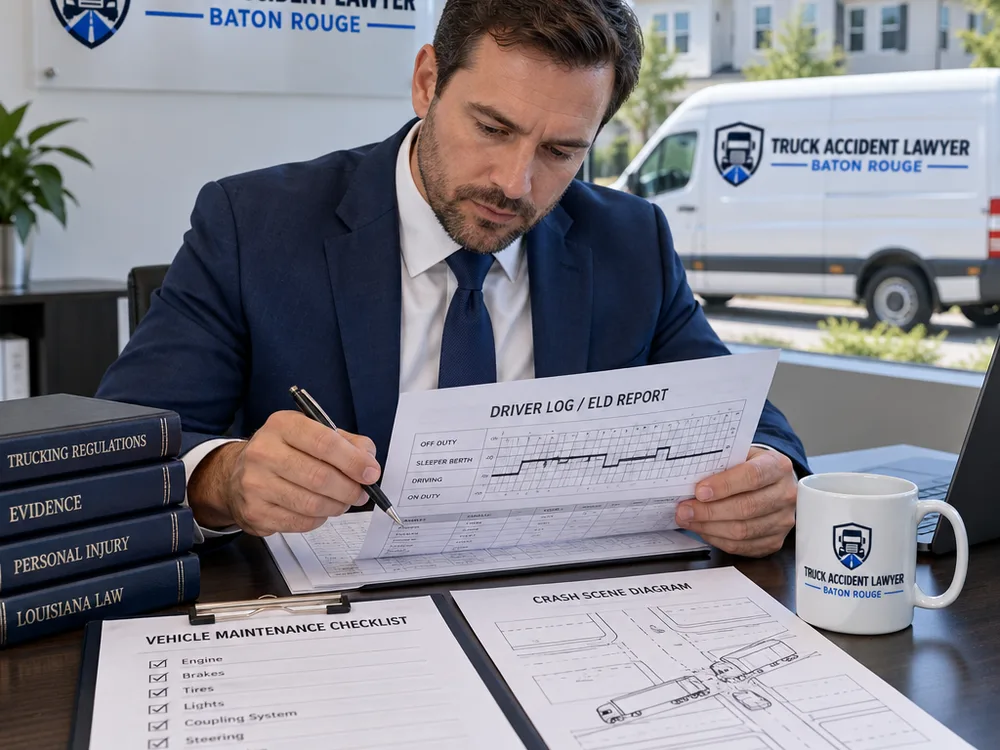
Evidence is also more technical. We look for the documents and data that typically decide liability in trucking collisions, such as:
Because Baton Rouge traffic corridors see heavy commercial flow, crashes on routes like I-10 and I-12 can create chain-reaction impacts and conflicting stories about who started what. We build the timeline and the proof so your claim does not depend on guesswork.
Case support
We act early to request and preserve key trucking records and electronic data that can be lost with routine company retention cycles.
We analyze the driver, the motor carrier, and any third parties so the case targets every available insurance layer, not just one policy.
Medical records, missed work, and future care needs are organized into a clear damages story that supports a demand for full compensation.
You get practical next steps and case status updates so you are not left wondering what is happening or why it matters.
We manage insurer contact, recorded statement issues, and settlement tactics so your recovery does not turn into a daily dispute.
Claim process
We listen to what happened, review what you have—reports, photos, and medical visits—and outline the likely claim path based on the vehicles and companies involved.
We seek the records that commonly control liability in commercial cases, including log data, maintenance files, dispatch communications, and driver background materials.
We assemble documentation of your injuries, treatment plan, time away from work, and the ways the crash changed daily life, using records that stand up in negotiations.
Once the proof supports a valuation, we present a structured demand and negotiate with insurers and defense counsel from a position supported by documents, not estimates.
If a fair resolution is not offered, we prepare the case for court by pursuing discovery, depositions, and expert support where the facts require it.
Crash investigation
The way an 18-wheeler crash happens often points to the proof that matters most. We frequently see cases involving unsafe lane changes, rear-end impacts in slowed traffic, wide turns that squeeze smaller vehicles, and distraction or fatigue issues that show up in log patterns and trip schedules.
We examine whether the truck driver maintained enough distance to respond safely to congestion and changing traffic conditions.
Log patterns, trip schedules, and dispatch decisions may show whether fatigue or unreasonable driving demands contributed to the collision.
Inspection, repair, and braking records may tell a different story from the adjuster's first explanation of the crash.
Baton Rouge's commute and commercial traffic can create fast-changing conditions, particularly near major interchanges and during congestion. If your collision involved another type of commercial truck, the legal and insurance issues still come down to company records, driver conduct, and proof of damages.
The strongest truck cases are built early.
If you are dealing with injuries, vehicle loss, or time off work after an 18-wheeler crash, a prompt legal review can help protect evidence and keep the claim on track.
Practical answers
Get medical care first, then preserve evidence you control: photos of the vehicles and scene, names of witnesses, and all paperwork you receive. Avoid giving recorded statements to a trucking or auto insurer until you understand what is being asked and why, because early statements can be used to shift fault before the facts are fully known.
Liability can include the truck driver and the motor carrier, and it can extend to other companies when the facts support it, such as maintenance contractors, a trailer owner, or a shipper involved in loading and securement. A proper investigation looks for company records that show control, responsibility, and preventable safety failures.
Retention varies by record type and company practice, and some items may be kept only for limited periods under routine schedules. That is why early preservation requests matter in Baton Rouge 18-wheeler cases: the sooner the right records are identified, the easier it is to keep the claim anchored to objective proof.
You can typically seek compensation tied to the harm the crash caused, including medical bills, future care needs, lost income, reduced earning capacity, property loss, and pain and suffering. The value depends on documented injuries and the strength of liability evidence, not just the visible vehicle damage.
You can still have a valid claim even when fault is disputed, but the strategy has to address the specific allegations with evidence. We focus on scene facts, vehicle damage patterns, witness statements, and trucking records that show whether the commercial driver followed safe driving practices and company policies.
Not always. Many claims resolve through settlement when liability proof and damages documentation are strong, but you should prepare as if litigation may be necessary because trucking insurers often defend aggressively. Building the case thoroughly from the start improves settlement leverage and keeps you ready if suit becomes the best path.
Truck injury cases are commonly handled on a contingency fee, meaning the attorney fee is tied to recovery rather than billed hourly. The exact terms depend on the agreement you sign, and you should ask for the fee percentage and how case costs are handled before moving forward.
Share what happened, what treatment you have had so far, and any documents you have received. We will outline the claim approach, the evidence that matters most in trucking cases, and what a realistic timeline may look like.
Call for a Free Review